
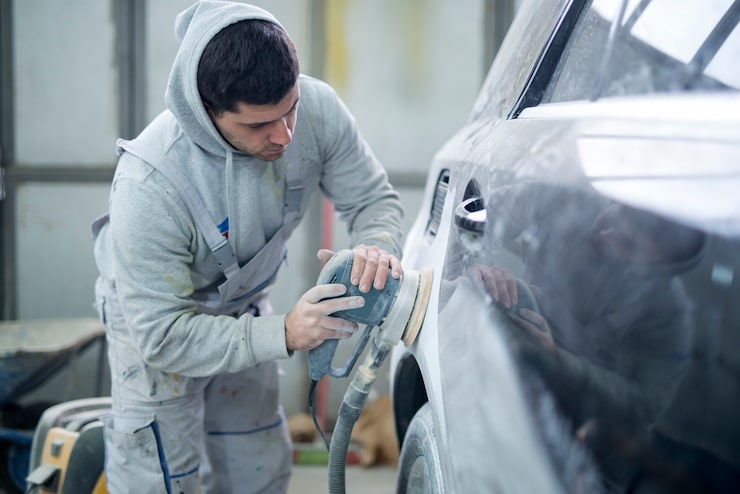
A scratched or damaged car’s paintwork is more than just a cosmetic issue—it directly affects resale value, corrosion resistance, and overall vehicle perception. In fact, even minor surface damage can reduce a car’s market value by hundreds or even thousands of dollars depending on severity and location. This is where understanding a realistic car repair cost estimate becomes essential for every vehicle owner. Whether it’s a light scratch, deep scrape, or full panel repaint, knowing what drives pricing helps you make informed decisions. This guide breaks down the true cost of car paint repair and what you should expect when visiting a workshop.
Understanding car repair cost estimate for paint damage
A reliable car repair cost estimate for paintwork depends on how damage is assessed and categorized by professionals. Most workshops begin by inspecting whether the damage is superficial or structural to the paint layers. Surface scratches may only require polishing, while deeper marks need sanding, filling, and repainting. This classification directly affects pricing.
Basic vs advanced evaluation
Basic inspections involve visual checks, while advanced assessments may include paint thickness measurement tools.
Real-world pricing context
For example, a small scratch on a door panel may cost significantly less than a full bumper repaint, even though both seem minor to the untrained eye. Understanding this early helps set realistic expectations before repair begins.
Factors affecting car paint repair cost estimate accuracy
Several variables influence how accurate a car repair cost estimate will be, and ignoring them often leads to unexpected expenses. Paint repair is not a one-size-fits-all service, and workshops consider multiple technical and material-based factors.
Type and depth of damage
Light scratches require polishing compounds, while deep paint breaches need primer, base coat, and clear coat application. The deeper the damage, the higher the cost.
Vehicle make and paint quality
Luxury vehicles or cars with special finishes such as metallic or pearl coatings require more expensive materials and skilled labor.
Labor rates and workshop standards
Authorized dealerships typically charge more than local garages due to equipment quality, trained technicians, and warranty-backed services.
Location and availability
Urban workshops often have higher pricing due to overhead costs and demand, affecting the final estimate.
Common types of car paint damage and repair methods
Different types of paint damage require different repair approaches, each influencing the final car repair cost estimate. Understanding these categories helps vehicle owners identify what kind of service they actually need.
Surface scratches
These are minor marks that only affect the clear coat. They can often be corrected through polishing or buffing without repainting.
Deep scratches and scuffs
When damage reaches the primer or metal layer, sanding and repainting become necessary. This is more labor-intensive and increases cost.
Paint chips and peeling
Often caused by debris or weather exposure, these require touch-up paint or full panel refinishing depending on severity.
Collision-related paint damage
Accident repairs usually involve multiple panels and blending paint across sections to ensure uniform color matching, significantly increasing the total estimate.
DIY vs professional car repair cost estimate comparison
Choosing between DIY solutions and professional services has a major impact on your car repair cost estimate, but also on long-term results. While DIY kits are widely available, they are not always suitable for all types of damage.
DIY repair approach
DIY kits are cost-effective for minor scratches and usually include polish, applicators, and touch-up paint. However, results depend heavily on user skill and may not perfectly match factory finishes.
Professional repair benefits
Professional workshops use advanced color-matching systems, spray booths, and certified materials, ensuring a seamless finish. This reduces the risk of uneven texture or visible repair marks.
Cost vs quality trade-off
While DIY methods are cheaper upfront, professional repairs often preserve vehicle value better, making them more cost-efficient in the long run.
How to get an accurate car repair cost estimate from workshops
Getting a precise car repair cost estimate requires more than a quick verbal quote. Vehicle owners should follow a structured approach to avoid hidden charges and miscommunication.
Provide detailed damage information
Sharing clear photos or in-person inspection helps technicians assess the true extent of damage.
Request itemized breakdowns
A transparent estimate should include labor, materials, paint type, and any additional services like dent removal.
Compare multiple workshops
Getting at least two or three estimates ensures competitive pricing and reduces the risk of overcharging.
Ask about warranty and paint quality
Reliable workshops often provide warranties on paintwork, which indicates confidence in their materials and process.
Conclusion
Understanding a car repair cost estimate for paint damage is essential for making informed maintenance decisions. From minor scratches to full-panel resprays, costs vary based on damage depth, materials, and labor expertise. By learning how estimates are formed and what factors influence them, car owners can avoid unnecessary expenses and poor-quality repairs. The next time your vehicle’s paint is damaged, will you rely on guesswork—or take a more informed approach to ensure value, quality, and long-term protection?
